
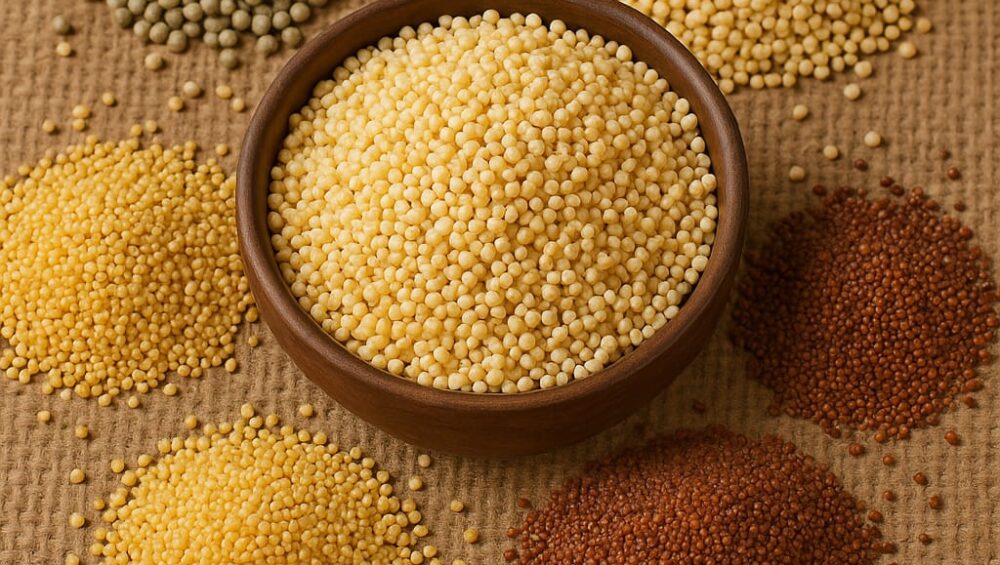
Millets: The Forgotten Grains with Timeless Nutrition
As an Ayurveda doctor, I often remind my patients that food is the first medicine. Among the many gifts of nature, millets hold a very special place. These ancient grains are light, wholesome, and naturally aligned with our body’s seasonal and doshic needs. Unlike refined cereals, millets are rich in fiber, plant protein, iron, calcium, magnesium, and essential B-vitamins. They release energy slowly, balancing blood sugar, supporting digestion, and keeping one fuller for longer.
Ayurveda describes food that nourishes Agni (digestive fire) as true healing food. Millets gently kindle the digestive fire without aggravating acidity or heaviness. They pacify Vata when cooked warm and soft, reduce Kapha when used in light preparations, and are suitable for Pitta when combined with cooling herbs or ghee. Regular millet consumption helps in weight balance, reduces bloating, improves skin health, and strengthens immunity.
In today’s fast lifestyle, reintroducing millets into daily meals—whether as porridge, rotis, or baked snacks—is a simple step towards holistic wellness. By honoring these traditional grains, we not only heal our bodies but also preserve a sustainable .
Millet Nutrition vs Wheat (per 100g raw grains)
| Grain | Energy (kcal) | Protein (g) | Fat (g) | Carbs (g) | Fiber (g) | Calcium (mg) | Iron (mg) | Glycemic Index |
| Wheat | 346 | 11.8 | 1.5 | 71.2 | 12.5 | 30 | 3.5 | 60–69 |
| Foxtail Millet | 331 | 12.3 | 4.3 | 60.9 | 6.7 | 31 | 2.8 | 50–55 |
| Little Millet | 341 | 9.7 | 4.7 | 67 | 7.6 | 17 | 9.3 | 45–54 |
| Barnyard Millet | 307 | 11.2 | 3.9 | 65.5 | 10.1 | 11 | 15.2 | 35–40 |
| Kodo Millet | 353 | 8.3 | 3.6 | 66.6 | 9 | 27 | 0.5 | 50–55 |
| Proso Millet | 356 | 12.5 | 1.1 | 70.4 | 2.2 | 14 | 0.8 | 50–57 |
| Bajra (Pearl Millet) | 361 | 11.6 | 5 | 67.5 | 11.5 | 42 | 8 | 55–65 |
| Ragi (Finger Millet) | 320 | 7.3 | 1.3 | 72 | 11.5 | 344 | 3.9 | 54–68 |
| Jowar (Sorghum) | 329 | 10.4 | 3.1 | 72.6 | 6.7 | 25 | 4.1 | 55–70 |
🌾 Key Ayurvedic & Health Notes
- Millets are lighter, more digestible, and Vata–Kapha balancing compared to wheat.
- Ragi is richest in calcium → excellent for bones & women’s health.
- Barnyard millet has lowest GI & calories → best for weight loss & diabetes.
- Bajra is warming & energy-giving → great for winter.
- Jowar is gluten-free, rich in iron & fiber.
- Wheat, though protein-rich, is heavier, gluten-containing and may aggravate Kapha when overused.
